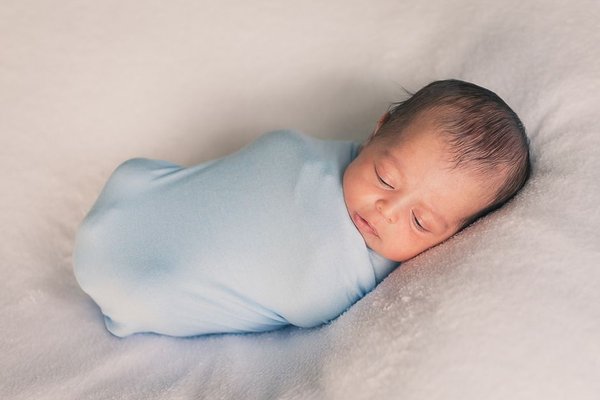
Choosing between a swaddle and a sleep sack can feel surprisingly complicated when you are caring for a tired newborn. A swaddle gently wraps the baby’s body and usually contains the arms, while a sleep sack is a wearable blanket that typically leaves the arms free. The better choice depends on your baby’s development, preference, fit, and whether there are any signs of trying to roll.
Swaddle vs. sleep sack: the main difference
A newborn swaddle blanket creates a snug, contained feeling around the upper body. For some babies, that can be calming and may reduce wake-ups caused by the newborn startle reflex. A swaddle may be a lightweight blanket or a purpose-made garment, but it should never restrict breathing or force the hips and legs straight.
A newborn sleep sack is usually a sleeveless wearable blanket that zips around the body while leaving the arms outside. It provides warmth without adding a loose blanket to the crib or bassinet. An arms-free sleep sack does not suppress the startle reflex; its main purpose is to provide a fitted layer of sleep clothing.
When a swaddle may be useful
Swaddling can suit the early newborn stage when a baby settles more easily with gentle containment. If your baby is not showing signs of rolling and seems calmer when wrapped, a correctly used swaddle may make naps or bedtime easier.
Swaddling is a soothing technique, not a way to reduce the risk of sudden infant death syndrome. A swaddled baby should always be placed on their back on a firm, flat, level sleep surface. Keep pillows, loose blankets, toys, bumpers, and other soft objects out of the sleep area.
The swaddle should stay secure without squeezing the chest. Around the hips and legs, there should be enough room for the knees to bend and the hips to move naturally rather than being held straight and tightly together.
When a sleep sack may be the better fit
A sleep sack can be a practical choice for parents who want warmth without loose bedding and do not need to contain the baby’s arms. A correctly sized, non-weighted wearable blanket for a newborn can be used from birth when the manufacturer states that it fits the baby’s current size. The neck and arm openings should fit well enough that the garment cannot ride up over the face.
An arms-free sleep sack can also continue to be used after a baby starts working on rolling, provided it does not compress the arms, chest, or body and still fits correctly.
Some products called sleep sacks also wrap or restrain the arms. Those function more like swaddles. Once a baby shows signs of trying to roll, products that compress the arms, chest, or body for swaddling should be stopped.
The biggest safety difference is rolling
The transition from swaddle to sleep sack should not be based on a fixed birthday. Babies develop at different rates, and some begin attempting to roll earlier than expected. Safe-sleep guidance recommends stopping swaddling as soon as a baby shows signs of trying to roll over rather than waiting for a completed roll.
This matters because a swaddled baby who reaches the stomach may have difficulty using the arms to reposition. An arms-free sleep sack allows free arm movement, so it does not create the same swaddling-related restriction.
A useful practical step is to have a properly sized sleep sack ready before you expect to need it. If your baby starts repeatedly turning onto a side, twisting the body, or pushing toward a roll, you can switch promptly instead of trying to extend swaddling for a few more nights.
Warmth, fit, and overheating
Neither option should be used to make a baby excessively warm. Choose sleep clothing according to room temperature and the product’s instructions rather than assuming that more layers are better. A common safe-sleep guideline is to dress a baby in no more than one extra layer compared with what an adult would find comfortable in the same room.
Check the baby’s chest or back when judging warmth. Sweating, damp hair, flushed skin, or a hot chest can suggest overheating. A sleep sack should also be the correct size; if it is too large, excess fabric may ride upward, while a swaddle that is too loose can unravel.
A real-world example
Imagine a three-week-old who settles quickly when swaddled and has not shown any rolling attempts. A lightweight, correctly fitted swaddle may be a reasonable part of that baby’s routine. A few weeks later, the same baby begins turning onto one side and pushing strongly with the legs. That developmental change is the cue to stop swaddling and move to an arms-free sleep sack rather than waiting for a successful roll.
Another newborn may dislike having the arms contained from the first night home. If that baby sleeps comfortably in fitted pajamas and a correctly sized sleep sack, there is no need to swaddle simply because it is common.
Safety rules that apply to both
Whichever option you choose, place your baby on their back for every sleep and use a firm, flat, level sleep surface intended for infants. Keep the sleep space bare except for a fitted sheet. Do not add a loose blanket over a swaddle or sleep sack.
Do not use weighted swaddles, weighted sleep sacks, weighted blankets, or other weighted infant sleep products. Added weight can interfere with an infant’s breathing and movement. If your baby was born prematurely or has breathing, hip, or other medical concerns, ask your pediatrician about suitable sleep clothing.
FAQ
Can a newborn use a sleep sack instead of a swaddle?
Yes. A newborn can use an appropriately sized, non-weighted sleep sack intended for their current size. Swaddling is optional, not a requirement for healthy sleep.
When should I switch from a swaddle to a sleep sack?
Switch as soon as your baby shows signs of trying to roll. Do not wait for a specific age or a complete roll. An arms-free, non-swaddling sleep sack can then provide warmth without restraining the arms.
Is a swaddle warmer than a sleep sack?
Not necessarily. Warmth depends on fabric, thickness, clothing underneath, room temperature, and product design. Avoid choosing either product based only on the assumption that a newborn needs heavy insulation.
Can I put a blanket over a baby in a sleep sack?
No. Loose blankets should stay out of an infant’s sleep area. Use fitted sleepwear or an appropriately sized wearable blanket newborn product instead.
Choosing the option that fits your newborn
For a very young baby who is not trying to roll and settles well with gentle containment, a properly used swaddle can be a useful soothing tool. For a baby who prefers free arms, or for one approaching the rolling stage, a correctly fitted arms-free sleep sack is often more practical. The key is to match the sleepwear to your baby’s development while keeping the sleep surface bare, avoiding weighted products, watching for rolling cues, and following safe-sleep guidance every time.