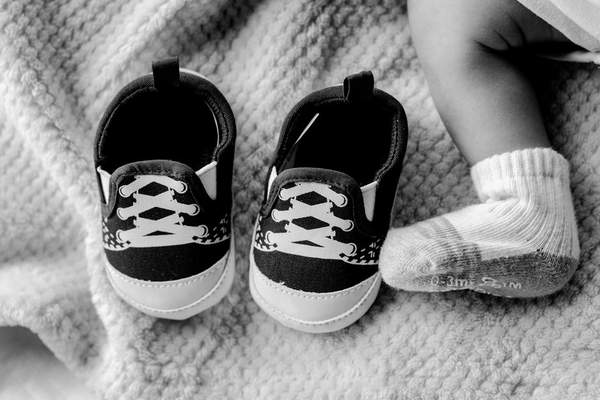
Baby socks have a talent for disappearing: one stays on through a nap, while its partner ends up somewhere between the stroller and the front door. Size is often the culprit. Roomy socks slide off; small ones bunch around the toes or leave uncomfortable marks. This baby socks size guide shows how to use foot length first, age second, and a quick fit check to choose pairs that stay put.
Baby sock sizes: start with foot length, not age
Packaging often says newborn, 0–3 months, 3–12 months, or 12–24 months. These labels are shopping shortcuts, not universal measurements. Babies of the same age can have different foot lengths, and sock brands use different shapes and stretch.
For example, Carter’s Canadian sizing guide lists these approximate foot-length ranges for selected socks:
Newborn (NB): 7.9–8.9 cm (about 3.1–3.5 inches). The 0–3 months size: 9.5–10.8 cm (about 3.7–4.3 inches). The 3–12 months size: 11.4–13.3 cm (about 4.5–5.2 inches). Some 12–24 months socks cover the same 11.4–13.3 cm range.
These numbers describe one retailer’s products, not how long every baby’s foot should be at a particular age. Overlapping ranges explain why an older baby might fit a younger age label. Check the exact chart for the pair you plan to buy.
How to measure baby foot length
All you need is paper, a pencil, and a ruler. Measure when your baby is relaxed, rather than when the toes are tightly curled.
A simple method
Place the foot gently on paper without pushing the toes flat. Mark the back of the heel and tip of the longest toe. Measure the straight distance between the marks, then repeat on the other foot. Use the longer measurement when comparing baby sock sizes.
If your baby wriggles, make several attempts and compare the results. Do not add the generous growing room you might allow in shoes: socks should stretch with the foot without leaving spare fabric at the toe.
Putting the number to work
Suppose the longer foot measures 10.2 cm. In the Carter’s example above, that falls within the listed 0–3 months range, even if your baby is older. Now test the actual sock. If the cuff digs in or the toes appear crowded, try a different cut or the next size rather than trusting the age label.
Signs that baby socks fit properly
A good fit moves with the foot without squeezing it. Check the socks after dressing your baby and again after some kicking or crawling.
The heel pocket should sit near the heel, fabric should lie smoothly over the toes, and the cuff should stay up without rolling. Toes should move naturally. Brief, faint fabric impressions can happen, but deep or persistent marks, redness, or obvious compression suggest that the sock is too tight.
Loose socks show different clues: the heel twists around the ankle, material folds under the foot, or the sock repeatedly slides beyond the toes. For babies starting to stand, fabric bunching underfoot is particularly inconvenient.
Why do baby socks keep slipping off?
A slipping sock does not necessarily need a tighter cuff. It may be too long. When the heel pocket sits above the baby’s heel, the fabric gradually moves downward with every kick.
Foot shape also matters. Some babies have slim ankles and fuller feet; others have narrow feet and fuller calves. A shaped heel or stretchy ribbed cuff may solve the problem better than changing size. Avoid restrictive elastic simply to keep socks on.
Washing can alter fit. Compare an older pair with a newer pair of the same labelled size. If the older socks have shrunk or lost elasticity, they no longer fit as intended. Cotton blends containing some elastane often have useful recovery, though quality and care still matter.
When should you go up a sock size?
Infant socks sizing is not a once-only decision. Feet grow, and a comfortable pair may stop fitting without much warning. Recheck when toes push against the end, cuffs leave stronger marks, or putting socks on becomes difficult.
Measure again before buying a multipack, and try a single pair where possible. Oversizing may recreate the slipping problem. A baby shoe size guide can help with footwear purchases, but shoes and socks have different fitting requirements.
Choosing socks for newborns and active babies
For newborn sock size, prioritise soft fabric, a gentle cuff, and smooth seams. Check inside for loose threads. A sock that slides on without force is more practical than one that needs repeated tugging.
For crawling and early walking, choose socks that remain aligned with the foot. Non-slip grips may be useful on smooth floors after walking begins, but they are not a substitute for supervision. Bare feet are also suitable indoors when surfaces are clean, warm, and safe.
Before stocking up, consult a baby clothing size chart for other garments and a newborn essentials checklist for quantities. Buying a small trial pack of socks is sensible until you know which fit works.
Frequently asked questions
What sock size does a newborn need?
Newborn or NB is a common starting label, but measurements differ by brand. Measure from heel to longest toe and match the result to the manufacturer’s sock chart. Very small babies may need a smaller style.
Should I size up between two baby sock sizes?
Check stretch and cuff comfort first. If the smaller sock crowds the toes, try the next size. If the larger sock bunches or falls off, a different cut may be a better solution.
Are baby sock sizes the same as shoe sizes?
No. Some sock labels show a corresponding shoe-size range, but shoes account for construction and space around the foot. Use the sock manufacturer’s own chart when possible.
How often should I check sock fit?
There is no fixed schedule. Check after a growth spurt, when socks start twisting or slipping, or when familiar pairs leave new pressure marks. Re-measure before ordering replacements.
The best fit is the one that works now
A useful baby socks size guide begins with an actual foot measurement, then checks the brand’s chart and how the fabric behaves in daily movement. If the heel stays in place, the toes move comfortably, and the cuff doesn’t pinch, you’ve found a better fit—and perhaps one less lost sock.