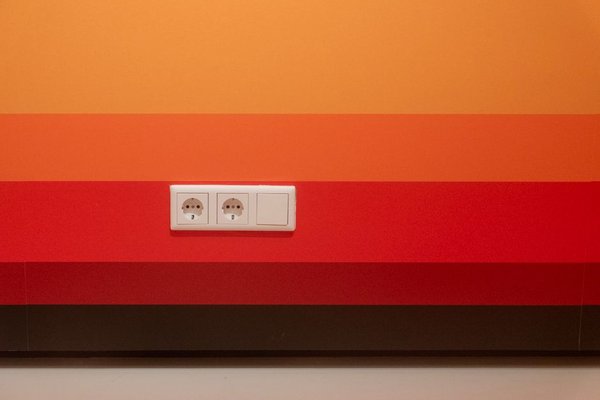
A crawling baby sees an outlet as another curious detail at floor level. The charging cable beside it may be even more interesting. That is why babyproofing electrical outlets takes more than covering empty sockets: plugged-in devices, power strips, and dangling cords all need attention.
Begin with a child’s-eye inspection, protect the outlets that need it, and remove electrical clutter wherever possible. The goal is to make everyday rooms safer before your baby learns to crawl, stand, and reach behind furniture.
Inspect Every Room From Floor Level
Get down on your hands and knees to check living rooms, bedrooms, the nursery, and hallways. Look behind movable furniture, beneath desks, and beside beds. An outlet blocked by a sofa can become accessible when someone rearranges the room.
Notice loose plugs, cracked faceplates, damaged cords, floor-level power strips, and chargers left connected after use. Include rooms where grandparents or other caregivers spend time with your child. A general babyproofing your home checklist can help you spot non-electrical hazards during the same walk-through.
Protect Unused Electrical Outlets
Consider Tamper-Resistant Receptacles
For standard U.S. household outlets, tamper-resistant receptacles provide built-in protection. Usually marked “TR,” they contain shutters that are designed to open when a proper plug presses into both slots together. This helps prevent children from inserting keys, hairpins, and similar objects into one opening.
Ask a qualified electrician about replacing older receptacles and meeting local electrical requirements. Tamper-resistant outlets are not the same as ground-fault circuit interrupter (GFCI) outlets. GFCI protection helps reduce certain shock hazards by switching power off when current leakage is detected; tamper-resistant shutters help prevent objects entering receptacles. Some models combine both features.
Choose Outlet Covers for Babies With Care
Plug-in plastic caps and sliding outlet plates can protect unused sockets when they fit correctly. Select products compatible with the receptacle and follow the manufacturer’s directions. Inspect each cover for looseness and damage.
Small removable caps can introduce another risk. If a toddler pulls one out, the outlet becomes exposed and the cap may become a choking hazard. The U.S. Consumer Product Safety Commission recommends protectors that children cannot easily remove and that are too large to choke on. Never assume a cover eliminates the need for supervision.
Safeguard Outlets With Plugs in Use
Empty outlets are only half the picture. Children can tug a connected cable, pull a plug partly out, or drag a lamp off a table. For an outlet that must remain in use at floor level, consider a compatible enclosed in-use outlet cover designed to keep fingers away from the plug.
Check that any enclosure accommodates the plug without crushing the cable or restricting ventilation. Never force bulky adapters into unsuitable covers. Move appliances and charging stations beyond reach whenever practical; distance is often more effective than adding accessories.
A plug that slips out easily, a hot outlet, buzzing, sparks, or discoloration calls for professional attention. Stop using the affected equipment and contact a qualified electrician. A safety cover cannot repair a faulty connection.
Babyproof Power Cords and Charging Cables
Start by unplugging devices that are not needed. Then route essential cords behind stable furniture or through cable management products suitable for the installation. Keep cables away from play areas without bending them sharply, pinching their insulation, or fastening them with staples.
Do not run electrical cords under rugs, across doorways, or beneath furniture legs. These arrangements can damage insulation and create trip or overheating hazards. Inspect cables regularly, replacing any with fraying, exposed conductors, or cracked plugs rather than covering the damage with tape.
A cord can also pull equipment down. Secure lamps, televisions, and other devices so a child’s tug will not topple them. Keep baby monitor and other cords well away from cribs and sleeping areas because accessible cords can pose a strangulation hazard.
Example: The Charger Beside the Sofa
Imagine a phone charger plugged in behind a side table, with its cable trailing into your baby’s crawling space. An outlet cover alone will not fix the dangling cord. Move charging to an inaccessible location, unplug the adapter after use, and remove the cable from the floor. This small change addresses both the outlet and the temptation to pull or chew the wire.
Move Power Strips Out of Reach
Power strips bring several sockets together, often where babies play. Relocate them to a dry, ventilated position inaccessible to children. If a strip is designed for mounting, follow its instructions; do not enclose it in a way that traps heat.
A surge protector is not automatically childproof. Surge protection handles certain voltage spikes, not children’s fingers or objects. Protect unused sockets with appropriate compatible devices and avoid daisy-chaining power strips or extension cords.
Keep chargers out of reach, especially when their cables are detached. Buy appropriately certified products from reputable sellers, and discard damaged adapters. A nursery safety essentials guide can also help you decide where to place lamps, monitors, and powered accessories.
Understand the Limits of Outlet Babyproofing
Electrical safety for babies also requires sound wiring. Use GFCI protection in locations where required, particularly around water. Keep appliances away from sinks and bathtubs, avoid overloading outlets, and never use extension cords as permanent wiring.
Follow appliance instructions carefully. High-power equipment, including many space heaters, should connect directly to an appropriate wall receptacle rather than a power strip. For additional outlets or suspected wiring defects, consult a qualified electrician instead of improvising an adapter arrangement.
If a child suffers electrical shock, avoid touching them while they may still contact live electricity. Disconnect power if you can do so safely, call emergency services, and follow professional instructions.
Repeat Your Safety Check as Your Baby Grows
Inspect outlet covers, plugs, and cords about once a month and whenever furniture moves or new electronics arrive. Check whether a once-hidden power strip is now visible, whether a baby can reach farther while standing, and whether any cover has worked loose.
A room-by-room child safety checklist makes these inspections easier to repeat. Babyproofing is not a one-time purchase; it changes with your child’s mobility.
Frequently Asked Questions
Are plastic outlet plugs enough to protect a baby?
No. Properly fitted caps can help protect unused sockets, but some may be removed and become choking hazards. Tamper-resistant receptacles provide built-in protection, while cords and plugged-in equipment still need separate safeguards.
Are childproof outlets the same as GFCI outlets?
No. Tamper-resistant outlets help prevent objects entering socket openings. GFCI devices interrupt power under certain fault conditions. Depending on the location, both protections may be appropriate.
How do I stop my baby pulling power cords?
Remove unnecessary cables, relocate charging stations, route necessary wires out of reach, and secure equipment that could be pulled down. Avoid leaving loose cable bundles on the floor.
When should I start babyproofing electrical outlets?
Before your child begins crawling. Review the setup again as they start cruising, standing, and climbing, when previously inaccessible areas may become reachable.
Keep the Whole Electrical Setup in Mind
Babyproofing electrical outlets works best when you consider sockets, plugs, cords, and devices together. Prioritize tamper-resistant receptacles, manage accessible cables, remove unnecessary power strips, and recheck each room as your child grows. Even a carefully prepared home still needs attentive supervision.