A baby can go from sitting quietly to reaching a power cord surprisingly quickly. The best babyproofing checklist starts before crawling and looks beyond the nursery: kitchens, stairs, bathrooms, laundry areas, and furniture adults barely notice. You do not need to cover every corner in plastic. You do need to identify hazards a curious child can reach, pull, climb, swallow, or fall into.
Use this room-by-room guide as a practical first pass, then repeat it as your baby becomes more mobile. Safety products help, but never replace supervision.
Start With the Hazards That Matter Most
Before buying cabinet locks, address the most serious risks. Anchor furniture and televisions, secure stairways, remove strangulation cords, lock away medicines and chemicals, and prevent access to water. Then work through smaller hazards such as sharp furniture edges.
Try a floor-level inspection: kneel or crawl through the rooms where your baby will play. From that height, a dangling charger, coin beneath the sofa, or accessible plant becomes obvious. Repeat the inspection when furniture moves.
Whole-Home Baby Safety Checklist
Doors, Windows, Outlets, and Cords
Fit properly designed outlet covers or use tamper-resistant receptacles, ensuring covers cannot become choking hazards if removed. Keep extension cords and charging leads out of reach. Choose cordless window coverings; tied-up blind cords can still pose a strangulation risk.
Install appropriate window guards or opening-limiting devices where falls are possible. Screens do not prevent falls, and safety devices must preserve emergency escape. Keep climbable furniture away from windows.
Check doors for finger-pinch points. Make sure smoke and carbon monoxide alarms are installed and maintained according to local guidance.
Furniture and Shared Living Spaces
Anchor dressers, shelving, bookcases, and televisions according to manufacturer instructions, even if they seem stable. Remove toys and remote controls from high shelves so a toddler has less reason to climb. Keep heavy decorations out of reach.
Move low tables with hard corners out of play paths or use firmly attached edge protection. Check under cushions for coins, button batteries, magnets, and other small objects. A child can discover these long before an adult notices them.
For further detail, see a furniture tip-over prevention guide alongside this home babyproofing checklist.
Babyproofing the Kitchen
Store cleaning sprays, detergent, dishwasher products, and sharp tools in high, locked storage. Cabinet latches are a backup, not a guarantee. Keep knives, plastic bags, magnets, and button batteries away from children.
Use rear stove burners when possible, turn pan handles inward, and keep hot drinks away from counter edges. Confirm that a freestanding range has its required anti-tip bracket. Avoid carrying hot food while holding your baby.
Check appliance cords, trash bins, pet food, and low drawers. A kitchen babyproofing guide can help with the details, but a closed gate or door is often the simplest protection while cooking.
Making the Nursery and Bedrooms Safer
Keep the crib clear: use a firm, flat mattress with a fitted sheet, and place your baby on their back for sleep. Leave out pillows, blankets, bumpers, loose bedding, and soft toys. Keep the crib away from windows, blinds, and monitor cords.
Anchor bedroom furniture and keep changing supplies within the adult’s reach. Keep one hand on your child during diaper changes on an elevated surface; a changing-table strap is no substitute for attention.
Check that toys are age-appropriate and free of loose parts. Adjust crib settings as your child grows, following the manufacturer’s limits. A nursery sleep safety checklist can help with the details that change during the first year.
Bathroom Babyproofing Checklist
Never leave a baby alone in the bath, even briefly or with an older sibling. Empty tubs, buckets, and other containers immediately after use. Keep the bathroom door shut when unused and consider a toilet-lid lock.
Lock away medications, razors, cosmetics, and cleaning products. Child-resistant packaging is not childproof. Keep electrical appliances unplugged and away from water, and use nonslip surfaces where appropriate.
Check bathwater temperature before putting your child in. Gather towels and supplies first so you never need to step away during the bath.
Laundry Rooms, Stairs, and Utility Spaces
Laundry and Storage
Store laundry detergent packets, stain removers, and chemicals high and locked away, ideally in their original containers. Keep washer and dryer doors shut. Secure ironing equipment and dangling cords.
Lock access to tools, pesticides, batteries, and other hazardous items in garages. Never leave a vehicle running in an attached garage, and keep children away from vehicles and automatic doors.
Stairs and Changes in Level
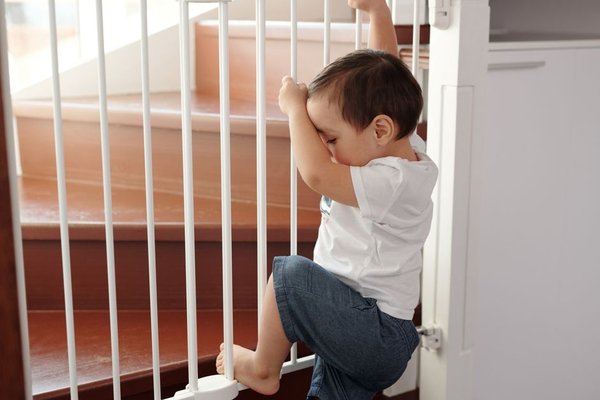
Install a properly fitted, hardware-mounted safety gate at the top of stairs. At the bottom, use a gate suited to its location and installation instructions. Never rely on pressure-mounted gates at the top of a staircase.
Inspect railings, balconies, and landings for gaps and climbing opportunities. Keep stairs free of toys, and check gate latches whenever you pass through. Teach older children not to open gates for the baby.
Do Not Forget Outdoor Water and Visiting Homes
Where there is a pool, use compliant barriers with self-closing, self-latching gates and supervise children directly near water. Empty paddling pools after use. Keep garden chemicals, tools, and grills inaccessible.
A relative’s house may have unsecured furniture, open stairs, or reachable medications. Before a visit, scan the rooms your child will use and bring a portable play space if a safe area cannot be established.
Keep Updating the Childproofing Checklist
Babyproofing your home is not a one-time shopping trip. A crawler needs protected outlets and stairs; a new walker reaches tabletops; a climber may defeat yesterday’s barriers. Check locks, anchors, gates, and cords regularly.
Make one safe area for everyday play, then expand it. When your child gains a new skill, revisit the entire baby safety checklist rather than waiting for an accident to reveal a hazard.
Frequently Asked Questions
When should I start babyproofing my home?
Begin before crawling, preferably while you have time to install gates and anchors carefully. Rolling and reaching can create hazards earlier than expected.
Which babyproofing tasks should come first?
Start with furniture anchoring, stair gates, window and blind-cord safety, locked chemicals and medications, safe sleep, and barriers around water. These address risks that can cause serious injuries.
Do outlet covers and cabinet locks make a room completely safe?
No. Safety devices can fail, be removed, or be outgrown. Choose suitable products, install them correctly, inspect them regularly, and supervise your child.
Should I babyproof rooms my baby rarely enters?
Yes, if your child could reach them through an open door or during a visit. Secure access and hazardous storage even when a room is not a regular play area.
A Safer Home, One Room at a Time
This childproofing checklist is a starting point, not a promise that every hazard can be eliminated. Tackle the serious risks first, inspect each room at your baby’s eye level, and update precautions as new skills appear. That steady routine is more useful than buying every gadget on the shelf.