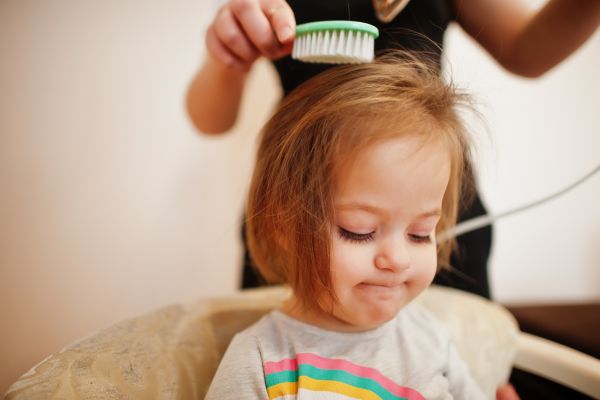
A baby’s first haircut can feel surprisingly emotional. One day you are brushing soft newborn fuzz away from their forehead, and the next you are wondering whether those wispy strands are getting too long, too uneven, or too close to their eyes. For some parents, the idea of cutting baby hair feels practical. For others, it feels like a milestone they are not quite ready for.
So, when to cut baby hair? The honest answer is that there is no perfect age that works for every child. Some babies need a small trim within the first few months, while others do not need one until after their first birthday. Hair growth in babies is very individual, and the best time usually depends on comfort, safety, hair length, and your own family traditions.
Understanding Baby Hair Growth
Baby hair has a personality of its own. Some newborns arrive with a full head of thick hair, while others have only a light layer of soft fuzz. Some babies lose much of their newborn hair in the first few months, then grow a completely different texture or color later on. This is all very normal.
Newborn hair often changes because of natural shifts after birth. A baby who was born with dark, silky hair may suddenly have lighter, finer hair a few months later. Another baby may have bald patches from rubbing their head against the mattress while sleeping. These changes do not usually mean the hair is unhealthy. They are simply part of early development.
Because baby hair grows at different speeds, age alone is not the best guide. A six-month-old with hair falling into their eyes may need a trim before a one-year-old whose hair is still short and fine. That is why parents are usually better off watching the hair itself rather than following a strict calendar.
There Is No Fixed Age for the First Haircut
Many parents ask when to cut baby hair because they expect there to be a recommended month or stage. In reality, there is no universal rule. Some families wait until the baby is one year old. Some trim earlier for comfort. Some wait much longer because the hair is not bothering the child at all.
A first haircut is usually needed when the hair starts causing a practical problem. If it keeps getting into the baby’s eyes, tangles easily, traps sweat around the neck, or looks uneven in a way that bothers you, a trim may be reasonable. But if your baby’s hair is soft, manageable, and not irritating them, there is no rush.
It is also worth remembering that cutting hair does not make it grow thicker. This is one of the most common baby hair myths. A haircut may make the ends look fuller because the fine tips are removed, but it does not change the number of hair follicles or the natural texture. Your baby’s hair will grow according to genetics and development, not because it was cut early.
Signs Your Baby May Be Ready for a Trim
The best time for a first haircut often announces itself in small, everyday ways. You may notice your baby blinking because hair keeps falling across their eyes. You may see little knots forming at the back of the head. The hair around the ears may look messy, or the back may grow longer than the top.
Some babies also get warm and sweaty when thick hair sits around the neck, especially in hot weather. In that case, a light trim can make them more comfortable. The goal does not have to be a full haircut. Sometimes a tiny tidy-up around the fringe, ears, or neckline is enough.
If your baby’s hair is uneven but not causing discomfort, you can wait. Baby hair often grows in patches, and uneven growth is common. A slightly wild little hairstyle is part of babyhood for many children. Not every uneven strand needs to be corrected immediately.
Cultural and Family Traditions Matter Too
For many families, a baby’s first haircut is not only about hair length. It may be connected to faith, culture, family customs, or personal meaning. Some traditions include shaving or cutting a baby’s hair at a certain age. Others treat the first haircut as a keepsake moment, saving a small lock of hair afterward.
These traditions can be meaningful and comforting. If your family follows a particular custom, it is still important to keep safety and your baby’s comfort in mind. The timing should allow for a calm environment, clean tools, and gentle handling. A baby who is tired, hungry, or unwell will not enjoy the experience, no matter how important the occasion feels.
If there is pressure from relatives to cut the hair before you feel ready, it is okay to slow things down. Parents can respect tradition while still choosing a safe and sensible moment for their baby.
Choosing Between a Home Trim and a Salon Visit
The first haircut does not have to be dramatic. For some babies, a small trim at home works perfectly well. A parent may carefully trim the fringe or tidy the sides while the baby is calm, perhaps after a nap or during a quiet moment. If you do this, use baby-safe scissors with rounded tips if possible, and make sure another adult is nearby to help keep the baby still.
Other parents feel more comfortable going to a professional. A hairdresser who has experience with babies or young children can often work quickly and gently. The salon environment, however, may be overwhelming for some babies. Strange sounds, bright lights, mirrors, and unfamiliar faces can turn a simple trim into a stressful event.
If you choose a salon, try to pick a time when your baby is usually rested and fed. Bring a favorite toy or comfort item. Do not expect your baby to sit perfectly still. A good first haircut is not about creating a flawless style; it is about getting through the experience safely and calmly.
Safety Comes Before Style
Baby haircuts require patience because babies move suddenly. They turn their heads without warning, reach for shiny objects, and may become upset if they feel restricted. This is why safety matters more than neatness.
Never cut baby hair when you are rushed. Avoid sharp adult scissors if you are not confident using them around a moving baby. Do not trim near the eyes unless the baby is very still and you have good help. If your baby becomes upset, pause. A haircut can always continue later.
It is also better to cut less than you think you need to. Baby hair can shrink up slightly once it dries, especially if it has a soft curl or wave. A tiny trim is usually enough for the first time. You can always adjust later, but you cannot put the hair back once it is cut.
What About Shaving Baby Hair?
Some parents consider shaving baby hair because they believe it will grow back thicker, healthier, or stronger. This belief is common in many places, but shaving does not change the natural growth pattern of the hair. The new growth may feel blunt at first, which can create the appearance of thickness, but the actual hair structure is not transformed by shaving.
Shaving can also be uncomfortable or risky if not done carefully. A baby’s scalp is delicate, and even small nicks can be upsetting. If shaving is part of a cultural or religious practice, it should be done with clean tools, gentle handling, and great care. If there are any scalp issues, irritation, cradle cap, or skin concerns, it is better to ask a healthcare professional before shaving.
For most babies, shaving is not necessary for healthy hair growth. A gentle trim is enough when the hair needs tidying.
Making the First Haircut Feel Calm
A baby’s first haircut may be easier if you treat it as a quiet, flexible moment rather than a big production. Choose a time when your baby is in a good mood. Keep the room comfortable. Have a towel, comb, and clean clothes ready. If your baby is old enough to be distracted by a toy, song, or snack, use that to your advantage.
Some parents like to save a small curl or lock of hair as a memory. Others take a photo before and after. These little gestures can make the milestone feel sweet without adding pressure.
If the haircut is uneven, do not worry too much. Baby hair is forgiving, and it grows. The first trim is often more about learning than styling. Your baby may wiggle, you may feel nervous, and the final result may not look salon-perfect. That is okay. A calm baby and a safe experience matter far more.
Conclusion
Deciding when to cut baby hair is less about reaching a certain age and more about noticing what your baby needs. If the hair is bothering their eyes, tangling often, trapping heat, or becoming difficult to manage, it may be time for a gentle trim. If it is not causing any discomfort, there is no harm in waiting.
Every baby’s hair grows differently. Some need an early tidy-up, while others keep their soft baby fuzz for many months. Family traditions, personal comfort, and practical needs can all play a part in the decision. What matters most is that the first haircut is safe, gentle, and not rushed.
In the end, your baby’s first haircut is just one small step in a long line of changes. Whether you trim a tiny fringe at six months or wait until after the first birthday, the right time is the one that feels sensible for your baby and calm for you.