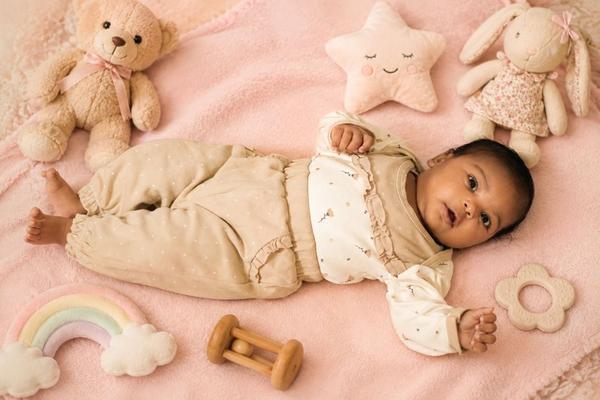
That cheerful rattle on the play mat looks harmless—until a tiny plastic cap comes loose. Babies investigate toys with their mouths, so choosing safe toys means looking beyond bright colors and age labels. The question is not simply whether a toy looks big enough. It is whether the whole toy, any detachable piece, or a broken fragment could block a young child’s airway.
Learning how to check safe toy size for babies makes shopping, hand-me-downs, and everyday play easier to manage. A quick inspection can reveal hazards that are surprisingly easy to miss.
What Size Toy Is Too Small for a Baby?
For children under three, a toy or component that fits completely inside a standard small-parts test cylinder is considered a small part under U.S. Consumer Product Safety Commission (CPSC) rules. This fixture is approximately 1.25 inches (31.7 mm) wide and 2.25 inches (57.1 mm) long, with a specially shaped interior.
The crucial detail is whether an object fits entirely inside the tester in any orientation without being compressed. The rule covers a complete toy, a removable component, or a piece that separates during simulated use and abuse testing.
How to Check Toy Choking Hazard Size at Home
Use a purpose-made small-parts tester
A small-parts tester, sometimes sold as a choke tube, is the most useful home screening tool. Place the item in the cylinder without pushing, squeezing, or forcing it. Try its natural orientations. If it goes all the way in, keep it away from babies and toddlers.
Test any separate piece as well as the main toy. Consider a toy car: its body might be large, while a removable wheel or decorative hubcap is not. Similarly, check the bell inside a rattle if the casing appears damaged.
Some people use a toilet-paper tube as a shortcut, but its dimensions are not the same as the regulated tester. It can provide misleading reassurance. A ruler alone is also insufficient because shape and orientation matter.
Check what a baby could pull or bite off
Examine buttons, glued-on eyes, beads, plastic caps, wheels, and other decorations. Gently check for looseness without deliberately breaking the toy. If something shifts, rattles unexpectedly, or seems poorly attached, take the toy out of circulation.
Why Age Labels Matter More Than Appearance
In the United States, toys intended for children under three cannot contain prohibited small parts. Certain products intended for older children require choking-hazard warnings. A label reading “3+” is not an invitation to offer the toy early because a baby seems advanced.
Read packaging before purchase, particularly for secondhand toys with missing boxes or instructions. Look for the manufacturer’s intended age, warnings, and recall information. A label is an important starting point, but it cannot replace checking the toy’s current condition.
A Toy Can Become Unsafe After You Buy It
Baby toy safety is not a one-time decision. Teeth, repeated drops, washing, and everyday wear can weaken parts that originally seemed secure.
During a regular toy check, look for cracked plastic, loose seams, torn fabric, exposed stuffing, missing fasteners, split wooden pieces, and damaged battery compartments. Squeeze soft toys gently to notice openings; inspect rattles for splits that could release their contents.
If a toy has broken, remove it immediately rather than assuming an adhesive repair will withstand chewing. Follow manufacturer guidance for cleaning and maintenance, and check official recall notices when a product raises concerns.
Hazards That a Size Test Cannot Fully Capture
A small parts choking hazard is only one part of the picture. Some especially dangerous objects deserve extra attention even if they seem unrelated to ordinary toys.
Button batteries and loose magnets
Button or coin batteries can cause severe internal burns if swallowed. Strong magnets can injure the digestive tract, especially when more than one is swallowed. Secure battery doors and keep magnetic construction pieces meant for older children away from babies.
If you suspect a child swallowed a button battery or magnet, seek urgent medical help immediately, even if they appear well. Do not wait for symptoms or try to manage the situation at home.
Balloons, water beads, and soft pieces
Uninflated balloons and broken balloon fragments are particularly dangerous because flexible latex can obstruct an airway. The American Academy of Pediatrics advises keeping balloons away from children younger than eight.
Water beads can expand after swallowing and cause serious internal injury. They do not belong in a baby’s play space. Small foam fragments, detached squeakers, and loose stuffing also warrant removal rather than reliance on a size measurement alone.
Make the Entire Play Area Pass the Check
Even carefully chosen safe toys for babies cannot protect against a coin beneath the sofa or a game piece carried in from another room. Before floor play, scan at your baby’s eye level. Check carpet edges, under furniture, between cushions, and beside storage baskets.
Store older siblings’ building sets, miniature figures, craft beads, and board-game tokens in a separate area. Explain that a toy suitable for a school-age child is not automatically safe to share with a crawling sibling.
Imagine a baby playing beside a five-year-old assembling a model. The baby’s large stacking cups may be appropriate, but a tiny wheel dropped from the model changes the safety of the entire floor. Moving the model activity to a high table, then checking the floor afterward, is more effective than inspecting the baby’s cups again.
Know What to Do if Choking Happens
Watch for inability to cry, breathe, or make sounds; severe breathing difficulty; or a change in skin color. Call emergency services immediately if a baby is choking, and follow age-appropriate choking first-aid guidance. Do not blindly sweep a finger through the baby’s mouth, as this can push an object farther back.
A pediatric first-aid and CPR course is worthwhile before an emergency occurs.
Frequently Asked Questions
Can I use a coin to judge safe toy size?
No. A coin is not a dependable substitute for a standard small-parts cylinder. An object’s length, shape, and orientation affect whether it can fit into the tester.
Are toys labeled for ages three and up safe for a two-year-old?
Not automatically. That age recommendation may reflect a choking risk from small parts. Choose toys labeled for your child’s age and inspect them for damage.
What if a toy is large but has tiny attached decorations?
Inspect the decorations. If small pieces can detach through ordinary use or wear, remove the toy from the baby’s play area. The size of the main toy does not cancel the risk.
How often should I inspect baby toys?
Check before first use, periodically during regular play, and whenever a toy is dropped, chewed heavily, damaged, or handed down. Also inspect the surrounding floor each time small items may have been scattered.
Keep the Check Simple and Repeatable
The safest approach combines three habits: choose age-appropriate toys, screen questionable pieces with a proper small-parts tester, and recheck toys as they wear. Add a quick floor scan before play, particularly in homes with older children.
No single measurement can identify every hazard. But a consistent routine helps turn an abstract warning about choking into practical decisions about what stays in a baby’s hands—and what belongs safely out of reach.