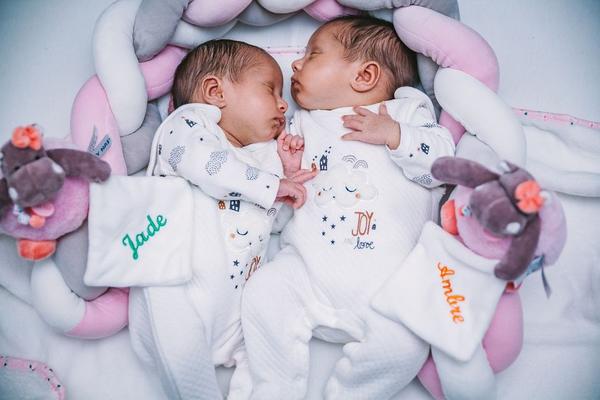
Choosing a name for your first baby means starting with a blank page. Choosing a name for your second or third is different: there is already a name being called across the house, written on birthday cards, and introduced at the playground. The new name has to feel right for its own child while sitting comfortably beside the names already in your family.
The best sibling baby names share a sense of belonging without sounding like a matching set. You might connect them through style, rhythm, language, or meaning. You do not need the same first letter, identical endings, or a complicated naming rule.
What Makes Sibling Names Sound Good Together?
Think about the impression each name creates. Eleanor and Henry feel traditional, while Milo and Zara have a brisk, contemporary energy. Neither pairing follows a strict formula.
Coordination matters most when it is subtle. A name should sound natural when you introduce your children together, but it also needs to work when that child is introduced alone. After all, siblings grow into adults with separate lives.
Five Useful Ways to Find Names That Go Together
Start with style, not matching initials
Ask what you loved about your older child’s name. Was it familiar but not overused in your circle? Literary, vintage, simple, or adventurous? If you chose Alice for its quiet, classic quality, James, Clara, or Felix may feel more connected than a name chosen only because it starts with A.
For families who prefer established favorites, browsing classic baby names can reveal options with a similar mood and different sounds.
Listen to rhythm and length
Names do not have to contain the same number of syllables. In fact, a little contrast often helps. A short name such as Mae can sit beautifully beside a longer one such as Sebastian. Say the names with your surname, because the full rhythm may change your opinion.
Consider shared language or family heritage
Some parents want sibling name ideas that reflect a language spoken at home, a grandparent’s background, or a family tradition. That connection can be more meaningful than a fashionable sound. You might choose names from the same naming tradition, or select different names that both have personal family significance.
Check pronunciations with speakers familiar with the language rather than assuming that similarly spelled names have the same origin. A name’s history, use, and pronunciation can vary by region.
Use meaning as a quiet connection
Meanings offer another approach to coordinating baby names. Perhaps one child’s name relates to a flower and you would like another with a botanical association, such as Iris and Hazel. Or you may prefer a less literal connection, like names that remind you of family places or cherished stories. Check name meanings with a reliable dictionary rather than relying on a single online claim.
Keep the sounds distinct enough
Similarity becomes less charming when names are hard to distinguish from the next room. Ella and Bella, for example, share nearly their entire sound. Rowan and Ronan can also blur together when spoken quickly. This is not a reason to reject a name you love, but it is worth noticing.
Try saying each child’s name at a normal volume, then calling it from another room. Distinct beginning consonants, stress patterns, or endings can make a pair easier to hear.
Sibling Name Sets for Different Styles
Timeless and understated
Alice and James, or Clara and Thomas, have recognizable shapes without rhyming. They suit parents who want names that feel familiar across different ages.
Vintage with personality
Hazel and Arthur, or Edith and Oscar, share an old-fashioned warmth. For more possibilities, look through vintage baby names and choose the ones you would genuinely enjoy saying every day.
Short and lively
Leo and Nina, or Max and Ivy, offer quick, clear sounds. Their shared simplicity ties them together even though the individual names have different rhythms.
Nature-inspired but not identical
Iris and Rowan, or Laurel and Jasper, suggest the outdoors without sounding like a theme pushed too far. Nature-inspired baby names can be especially useful if an older sibling already has a botanical or landscape-related name.
Contemporary and flexible
Maya and Ellis, or Arlo and Zoe, have an easygoing feel. Try them alongside your surname to see whether their sounds remain balanced.
Try the Real-Life Sibling Name Test
Imagine your older child is Rowan and you are considering Ronan, Iris, and Juliette. Write each combination on a card, then test it in situations you actually expect to encounter.
Say, “Rowan and Iris are coming with us,” then call, “Rowan, your shoes are by the door. Iris, yours are here.” Repeat with the other candidates. You may find that Ronan feels too close to Rowan when called aloud, while Juliette offers more contrast than you expected. Neither outcome is a universal verdict; it is information about your own household.
Next, reverse the introductions. Say the younger child’s name first. This small change exposes combinations that only feel balanced in one order. Finally, picture each child using their name independently at school, at work, and later in life.
Let Each Child Have Their Own Name
Matching initials can be sweet, but they are not required. Neither are matching origins, popularity rankings, or lengths. If your first child has an unusual name, you do not have to find an equally unusual one just to maintain a pattern. Likewise, a traditional first name does not prevent you from choosing something bolder next time.
Be particularly careful with sibling name sets that rely on a joke, near rhyme, or heavily themed pairing. What feels playful during pregnancy may be something both children must explain for years. A name that stands confidently on its own is usually the safer long-term choice.
Frequently Asked Questions
Do sibling names need to have the same origin?
No. Shared origin can be meaningful, especially in multilingual families, but similar style or a personal connection can bring names together just as naturally. Choose names you can pronounce and use comfortably.
Is it a bad idea to give siblings the same initial?
Not necessarily. Same-initial names can work well if the sounds are distinct. Consider everyday practicalities, including initials on school supplies and how clearly each name can be heard.
Should sibling names have a similar number of syllables?
There is no need. A one-syllable name and a four-syllable name can sound balanced together. Read both names aloud with the surname and focus on flow rather than counting syllables.
What if we love a name that does not match our first child’s?
Give that preference real weight. A loose family resemblance is pleasant, but loving the new child’s individual name matters more than making every introduction sound perfectly coordinated.
A Family Resemblance, Not a Formula
The most convincing sibling baby names feel connected because they reflect the same family’s tastes and experiences, not because they follow a rigid naming system. Begin with the name you already love, explore possibilities through style, sound, heritage, and meaning, then test your favorites in ordinary sentences. Aim for two names that are good companions while giving each child room to be entirely themselves.