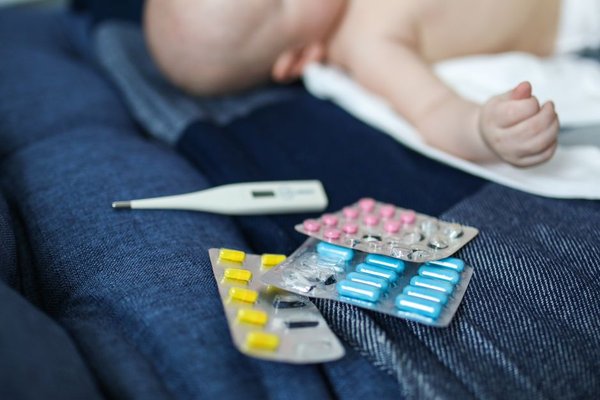
A warm forehead at bedtime can send any parent straight to the thermometer. The number matters, but it does not tell the whole story. Knowing when to call the pediatrician for a baby fever depends on age, breathing, feeding, alertness, and wet diapers. Some fevers can be monitored at home; others need urgent evaluation even when a baby seems comfortable.
Here is how to decide whether to call now, arrange same-day care, or watch closely. If your baby seems seriously unwell, seek emergency help rather than relying on an online checklist.
Start With Your Baby’s Age and Temperature
Under 3 months: 100.4°F (38°C) is urgent
If your baby is younger than 3 months (12 weeks) and has a temperature of 100.4°F (38°C) or higher, contact your pediatrician immediately and arrange urgent medical evaluation. Do not wait for a cough, rash, or other baby fever symptoms. Young infants can have serious infections without obvious signs, even when they appear content.
An emergency department is often appropriate for evaluating a febrile newborn. Follow your pediatrician’s immediate instructions; if you cannot reach them, do not delay evaluation. Do not give fever-reducing medicine before assessment unless a clinician directs you to.
From 3 to 6 months: call at lower temperatures
The American Academy of Pediatrics advises contacting the doctor when a baby between 3 and 6 months has a temperature of 101°F (38.3°C) or higher. Call sooner if your baby looks ill, feeds poorly, or develops concerning symptoms. Some health systems use different thresholds; follow more cautious instructions from your clinician.
Older than 6 months: consider the whole picture
For babies older than 6 months, call if the temperature reaches 103°F (39.4°C) or higher. A fever repeatedly rising above 104°F (40°C) warrants prompt medical advice at any age. Lower readings also matter when a baby acts unusually or is getting worse. Temperature alone cannot measure the severity of an infection.
Emergency Warning Signs: Do Not Wait for a Callback
Seek emergency care immediately if your baby is difficult to wake, unresponsive, has a seizure, develops blue or gray lips, or struggles to breathe. Watch for ribs pulling inward, grunting, or long pauses between breaths. Call emergency services for severe breathing difficulty or unresponsiveness.
Other infant fever red flags include a purple or bruise-like rash that does not fade with pressure, a stiff neck, or a bulging soft spot alongside illness. A limp, unusually weak, or persistently inconsolable baby also needs urgent assessment. Do not wait for the temperature to rise.
Not every urgent care center can evaluate young infants. If comparing urgent care baby fever options, ask whether the center accepts your baby’s age. Emergency departments can provide extensive testing and treatment when necessary.
Call the Pediatrician Today for These Changes
Several problems warrant prompt pediatrician fever advice even without an emergency. Contact the clinician if your baby refuses repeated feeds, vomits frequently, has significant diarrhea, develops an unexplained rash, or becomes unusually sleepy or irritable. Mention immune-system problems or chronic conditions because they may change the urgency.
Watch hydration. Fewer wet diapers than usual, a dry mouth, few tears, or a sunken soft spot can signal dehydration. No urine for around eight hours, particularly with poor feeding or lethargy, requires urgent evaluation.
Also call if a fever lasts longer than 24 hours in a child under 2 years, if your baby remains ill after the temperature drops, or if symptoms worsen after initial improvement. Fevers can follow vaccinations, but a baby under 3 months with 100.4°F (38°C) or higher still needs a prompt call.
Measure the Temperature Before Calling
Use a digital thermometer rather than judging fever by touch. Rectal measurements are generally most accurate for infants, especially under 3 months. Follow the manufacturer’s safety instructions and ask your pediatrician for a demonstration if unsure.
Underarm readings are less precise, and ear thermometers are unreliable under 6 months. Tell the clinician which method you used. Do not delay an urgent call while repeatedly trying to confirm a borderline reading in a young infant.
Record the highest temperature, time, and method. For example, “My 7-week-old has a rectal temperature of 100.6°F taken ten minutes ago” conveys urgency clearly. A separate guide to taking a baby’s temperature accurately can help with technique.
When Home Monitoring May Be Reasonable
An older baby with a mild fever who is alert, breathing comfortably, feeding normally, and producing wet diapers may be able to rest at home. Keep the room comfortable, use light clothing, and continue frequent breast milk or formula feeds. Do not substitute plain water for milk feeds in babies under 6 months.
Fever medicine is for discomfort, not for forcing a normal reading. Ask a clinician about weight-based acetaminophen dosing for children under 2 years. Do not give ibuprofen under 6 months unless directed, and never give aspirin. Avoid cold baths, rubbing alcohol, or alternating medicines without guidance.
Monitor breathing, feeds, and diapers instead of repeatedly chasing the thermometer number. A short log can help reveal changes. Additional reading about signs of dehydration in babies and caring for a congested baby may help you track related symptoms.
What to Tell the Pediatrician’s Office
Have your baby’s age, temperature, measurement method, fever duration, recent vaccinations, and symptoms ready. Share when the last wet diaper occurred, how feeding has changed, any medicines given, and whether your baby is less responsive than usual.
If advised to monitor at home, ask which changes require another call, when to check again, and where to go after office hours. A clear plan can make the next few hours less uncertain.
Frequently Asked Questions
Should I call if my baby has a fever but seems happy?
Yes, immediately for a baby under 3 months with 100.4°F (38°C) or higher. For older babies, appearing content is reassuring but does not override age-based thresholds or warning signs.
Can teething cause a true fever?
Teething may cause a slight temperature rise, but it does not explain a true fever of 100.4°F (38°C) or higher. Do not dismiss fever as teething, particularly in a young infant.
Should I go to urgent care or the emergency room?
Seek emergency evaluation for severe symptoms or a fever in a baby under 3 months. A stable older baby who needs same-day assessment may be seen in a pediatric clinic or age-appropriate urgent care. Call ahead when unsure.
What if the fever drops but my baby still looks sick?
Call the pediatrician. Lowering the temperature does not rule out serious illness. Persistent lethargy, poor feeding, difficult breathing, or unusual behavior matters more than a temporarily lower number.
The Bottom Line
Age sets the first fever rule, while alertness, breathing, hydration, and worsening symptoms guide the next step. Call immediately for fever in a baby under 3 months, seek emergency help for danger signs at any age, and contact your pediatrician whenever your baby’s behavior concerns you.