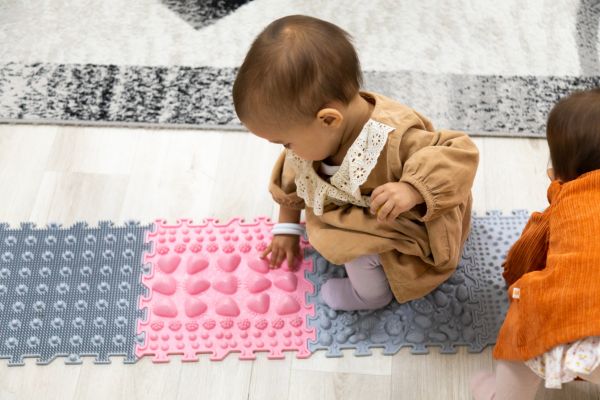
A baby play mat may look like a simple nursery item, but for many families, it quietly becomes one of the most-used spaces in the home. It is where a baby first stretches out beyond someone’s arms, studies the ceiling with wide eyes, kicks their legs, reaches for a toy, rolls for the first time, and later pushes up with growing strength. In those small, everyday moments, a play mat becomes more than padding on the floor. It becomes a little world.
This baby play mats guide is for parents and caregivers who want to choose thoughtfully, without getting lost in endless styles, materials, colors, and promises. The best play mat is not always the fanciest one. It is the one that fits your baby’s stage, your home, your cleaning routine, and the way your family actually lives.
Why a Baby Play Mat Matters
In the early months, babies need safe opportunities to move. They spend a lot of time being held, fed, carried, or placed in seats, so floor time gives them freedom. A good baby play mat offers a soft, clean, and comfortable surface where they can stretch, wiggle, turn their head, practice tummy time, and slowly discover what their body can do.
This kind of movement matters. When a baby lies on their back and kicks, they are building awareness of their legs. When they reach toward a toy, they are learning coordination. When they spend short periods on their tummy, they strengthen the neck, shoulders, back, and arms. These early movements may look small, but they are part of the foundation for rolling, sitting, crawling, and eventually walking.
A play mat also creates a predictable space. Babies do not need a room full of entertainment. Sometimes, they simply need a calm area where they can see, feel, listen, and move at their own pace.
Understanding Different Types of Baby Play Mats
Not all play mats are designed the same way. Some are soft quilted mats that fold easily and look cozy in a nursery. Others are foam mats that cover a larger part of the floor and give more cushioning for movement. Some come with arches, hanging toys, mirrors, music, or textured sections. Others are plain, simple, and made to blend into the home.
Activity mats are popular for younger babies because they often include hanging toys that encourage reaching and visual tracking. These can be useful during the first few months, especially when babies are just beginning to notice objects above them. However, as babies grow more mobile, they may need more open space than a small activity mat provides.
Foam play mats are often better for babies who are rolling, sitting, or beginning to crawl. They create a larger padded area and can be easier to wipe clean. Fabric mats, meanwhile, feel softer and more natural but may need frequent washing. There is no single perfect option. The right choice depends on your floor type, your baby’s age, and how much space you have.
Choosing the Right Material
Material is one of the most important parts of choosing a baby play mat. Since babies spend time lying, touching, and sometimes mouthing the surface, parents naturally want something safe and comfortable.
Foam mats are popular because they provide cushioning and are easy to clean. However, it is worth paying attention to the type of foam used and whether the mat is free from harsh chemicals. Many parents look for mats labeled non-toxic, BPA-free, phthalate-free, PVC-free, or formamide-free. These labels can be helpful, though it is still wise to read product details carefully rather than relying only on attractive packaging.
Cotton play mats feel soft, breathable, and familiar. They are often machine washable, which is a real advantage during spit-up days, diaper leaks, and snack crumbs later on. The trade-off is that cotton mats may not provide as much cushioning on hard floors unless they are thick or layered.
Rubber and natural latex options may appeal to parents who prefer more natural materials, though they can be heavier and sometimes more expensive. Whatever material you choose, the surface should feel gentle against the baby’s skin and sturdy enough to handle daily use.
Comfort and Cushioning for Everyday Play
A baby play mat should be soft, but not so plush that it makes movement difficult. This balance is important. Very thick, squishy surfaces can make it harder for babies to push up during tummy time or shift their weight when learning to roll. On the other hand, a mat that is too thin may not offer enough comfort, especially on tile, wood, or concrete floors.
For newborns and younger infants, a lightly padded mat may be enough. As babies become more active, a mat with better shock absorption can help protect little knees, elbows, and heads from the bumps that come with learning to move.
The floor underneath also matters. A thin quilted mat may work beautifully on carpet but feel too firm on ceramic tile. A foam mat may be ideal in a living room with hard flooring. Think about where the mat will actually be used, not just how it looks in photos.
Size and Space in the Home
Size is easy to overlook until the baby starts rolling. A tiny mat may work well in the newborn stage, but by six or seven months, many babies want more room to move. They roll off small mats quickly, which can be frustrating if the surrounding floor is cold or hard.
A larger mat gives babies freedom to explore without constantly being repositioned. It also creates a more useful family space. A parent can sit beside the baby, read a book, sing, stretch, or simply enjoy a few quiet minutes together.
Still, not every home has space for a large mat. In smaller rooms, a foldable or rollable design can be practical. Some families prefer puzzle-style foam tiles because they can adjust the size. Others like one-piece mats because there are fewer cracks for crumbs and dust to hide in. This baby play mats guide would not be complete without saying the obvious: the best size is the one you will actually keep using.
Easy Cleaning Is Not a Small Detail
Babies are messy in the most ordinary ways. They drool, spit up, leak, snack, crawl with sticky hands, and somehow find dust even right after cleaning. A play mat that is difficult to clean can quickly become annoying.
Wipeable mats are convenient for daily messes. A damp cloth can usually handle drool, milk spots, or small spills. This makes foam and waterproof mats especially practical for busy households. However, wipeable does not always mean deeply clean, so it is still important to check whether the surface holds odors or stains over time.
Fabric mats should be machine washable if possible. A beautiful mat that requires delicate hand washing may not feel so charming after the third accident of the week. Before choosing, check whether the entire mat can go into the washing machine or whether only the cover is washable.
Good cleaning habits also make play safer. A mat that is used daily should be cleaned often, especially once babies begin mouthing toys and placing their hands on the floor.
Safety Features to Look For
Safety should guide every choice. A baby play mat should lie flat and stay in place. Slippery mats can shift when a baby pushes against them, and curled edges can become a tripping hazard for adults or older siblings.
The mat should not have small detachable pieces that a baby could put in their mouth. If the mat includes hanging toys, check that they are securely attached and suitable for the baby’s age. Avoid long cords, loose threads, beads, or decorations that could come off.
Thickness matters too. A mat can soften everyday bumps, but it is not a substitute for supervision. Babies should still be watched closely, especially during tummy time or when they are learning to roll and sit. A safe play space also means keeping nearby furniture, sharp corners, cords, and small objects out of reach.
Colors, Patterns, and Sensory Value
It is tempting to choose a play mat based only on how well it matches the room. There is nothing wrong with wanting a lovely space, but babies experience design differently from adults. In the early months, they are drawn to contrast, shapes, faces, textures, and movement.
Some play mats use bold patterns to support visual interest. Others keep the surface calm and neutral, allowing parents to add a few simple toys. Both approaches can work. A highly stimulating mat may capture attention, but too much color, noise, and texture can sometimes feel overwhelming.
A balanced mat gives the baby something to notice without turning the floor into visual clutter. Soft patterns, gentle contrast, or a few textured areas can be enough. Remember, the baby will also be looking at your face, their hands, a rattle, sunlight on the wall, and all the little details adults forget to notice.
Matching the Mat to Your Baby’s Stage
A newborn may only need a soft place for short periods of supervised floor time. At this stage, comfort and simplicity matter most. As the baby reaches two to four months, tummy time becomes more active, and a mat with enough firmness to support pushing up can be helpful.
Around five to eight months, many babies begin rolling, pivoting, reaching farther, and trying to move. This is when a larger mat often becomes more useful. Babies need room to test their bodies. They may roll to the edge, turn in circles, or push backward before they ever crawl forward.
Older babies who sit and crawl may benefit from a durable mat that can handle more movement. At this stage, easy cleaning becomes even more important because play often includes snacks, toys, and plenty of hands-on exploring.
Creating a Simple Play Area
A play mat works best when the space around it feels calm and safe. You do not need to fill the mat with toys. In fact, too many objects can distract babies from focused exploration. One or two toys placed nearby may be enough.
For tummy time, try placing a small mirror, soft rattle, or fabric book within sight. For back play, hanging toys or a parent’s face can be more interesting than anything else. For rolling babies, leave open space so they can move without bumping into clutter.
The mat can also become part of daily rhythm. A few minutes after a diaper change, a short play session in the afternoon, or quiet floor time before a nap can help babies become familiar with the space. Over time, the mat becomes a place of comfort, movement, and discovery.
Conclusion
Choosing a baby play mat is not just about finding something soft for the floor. It is about creating a safe, comfortable place where a baby can begin to explore the world through movement. The right mat supports tummy time, rolling, reaching, sitting, and all those small in-between moments that shape early development.
This baby play mats guide comes down to a few thoughtful questions. Is the mat safe? Is it comfortable? Is it easy to clean? Does it give the baby enough space to move? Does it fit naturally into your home and routine?
A good baby play mat does not need to be flashy or complicated. It simply needs to support real life. When it does, it becomes more than a nursery accessory. It becomes the soft little stage where your baby practices strength, curiosity, and independence, one wiggle at a time.